
Today, Prime Minister Keir Starmer announced the most significant intervention in children’s online safety in a generation. Here’s what we know – and what it doesn’t solve.
This morning, at a Downing Street press conference, Keir Starmer promised to “call time on a system that’s failing our kids” and outlined plans for a ban on social media use by children under 16 in the UK. The announcement follows a government consultation that received over 116,000 responses – the highest number since the equal marriage debate in 2012 – with nine in ten parents backing the measure. According to the official government press release, the legislation is expected to reach Parliament before Christmas, with protections coming into force in Spring 2027.
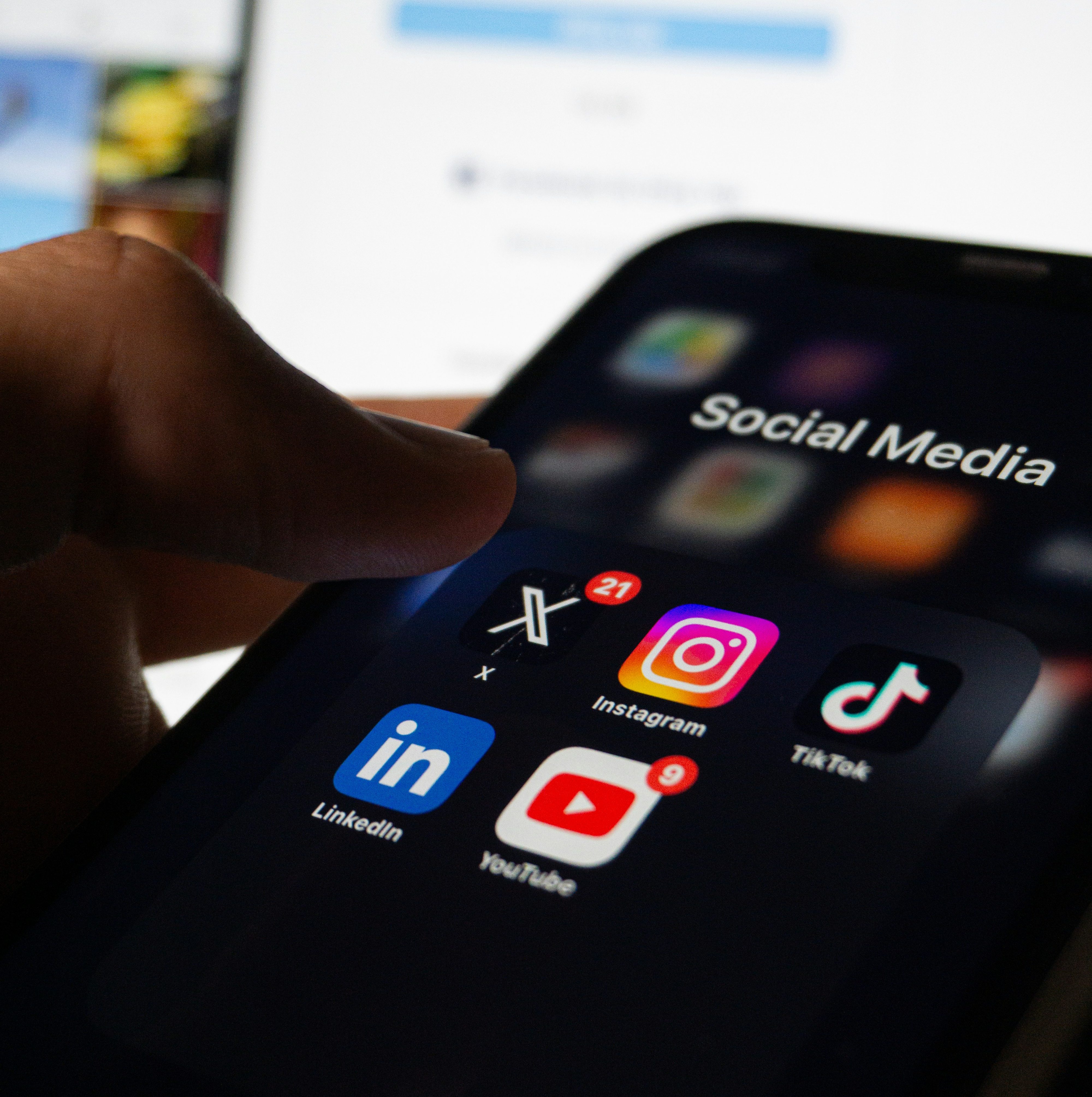
The UK is expected to follow Australia’s lead, raising the minimum age for platforms including TikTok, Instagram, Facebook, X, Snapchat and Reddit to 16. The ban goes further than Australia’s in several respects – it includes romantic and sexual AI chatbots, and is expected to restrict children from livestreaming and chatting with adult strangers on gaming platforms. Specific platforms and implementation details will follow, with Starmer warning that he will legislate if technology companies fail to act within three months.
This is a significant moment. But it’s worth being clear-eyed about what it does – and doesn’t – solve.
What the ban covers
The measure targets social media platforms with a minimum age of 16. The government has confirmed it will use the same model as Australia, capturing user-to-user platforms whose purpose is to enable social interaction – specifically naming Snapchat, TikTok, YouTube, Instagram, Facebook and X. Messaging services including WhatsApp and Signal are explicitly excluded from the ban.
That last one is worth pausing on. YouTube is in a different category from TikTok or Instagram in terms of how children use it – it is primarily a video platform where children watch content rather than a social network where they interact with peers. The government has indicated that specific platform decisions will follow, and it’s likely that YouTube will be treated differently given its dual function as both a social platform and a content library.
Even where the ban applies, a second question immediately follows: enforcement. As Australia found after introducing its own ban, preventing determined teenagers from accessing platforms using VPNs or false age declarations is an unsolved problem. Culture Secretary Lisa Nandy acknowledged on Sunday that the ban is “not a silver bullet.”
Why this is happening now
The announcement doesn’t come from nowhere. In May, Ofcom published findings that TikTok and YouTube had failed to commit to meaningful changes to reduce harmful content being served to children through their recommendation feeds. The Education Committee called for a ban in its response to the consultation. The Molly Rose Foundation – set up in memory of Molly Russell, who took her own life in 2017 after viewing harmful content on Instagram – has been among the most prominent voices calling for stronger action.
The consultation itself, which ran from March to May 2026, showed a parent population that has reached the limits of its tolerance with the current approach. Nine in ten parents backing a ban is not a divided public – it is a near-consensus that the current situation is unacceptable.
What has shifted is the framing. For years the debate was about content moderation – whether platforms were removing harmful material quickly enough. As we noted in our Ofcom coverage, the question has now moved: not “did the platform remove it?” but “why did the algorithm show it to a child in the first place?” That shift in framing is what has made a blanket age restriction feel like the logical next step to policymakers.
What it doesn’t solve
The Molly Rose Foundation – whose founder Molly Russell’s death was the catalyst for much of this debate – has raised concerns that a social media ban “will fail to tackle fundamental product safety risks and leaves parents with a false sense of safety.” That is a serious point from a serious organisation, and it deserves to be taken seriously alongside the case for the ban. The BBC’s full coverage of today’s announcement, including responses from campaign groups and industry, is available here.
The risk is this: a ban addresses access, but not architecture. The design features that make these platforms harmful – the recommendation algorithm, the infinite scroll, the autoplay that removes every natural stopping point – will still exist on whatever platforms children are using. A child who migrates from TikTok to a less regulated platform because TikTok is banned may be worse off, not better.
The ban also does nothing for the under-16s who are already on these platforms, will find ways to stay on them, or will move to alternatives outside the regulatory framework.
And it does nothing for YouTube – which is where the majority of younger children, particularly under-10s, spend most of their screen time. Whatever happens to TikTok and Instagram, the YouTube question remains.
What this means for parents right now
For parents of children under 16, the announcement is meaningful – but it is not a reason to relax. The ban will take time to implement, enforcement will be imperfect, and the platforms on which younger children spend most of their time may be treated differently.
The practical advice remains the same as it was before today’s announcement: active choices about which platforms your children access, and which they don’t, matter more than any regulatory framework. Regulation sets a floor – what parents do above that floor is still the most significant variable.
For YouTube specifically – which is both named in early reports and likely to be treated differently from purely social platforms – the question of how you structure your child’s viewing environment remains as relevant as ever. A ban on TikTok doesn’t change what the YouTube algorithm serves to an eight-year-old.
A moment of clarity
Whatever the implementation challenges, today’s announcement represents something important: an official acknowledgement that leaving children’s online safety to the platforms themselves has not worked. The consultation response – nine in ten parents backing a ban – tells you everything about where public trust in the tech industry currently sits.
Parents have been making these calls individually, with limited tools and limited information, for years. The policy is finally catching up with what most of them already knew.
Join a growing community of conscious parents taking back control – on YouTube, and everywhere else.

Leave a Reply