


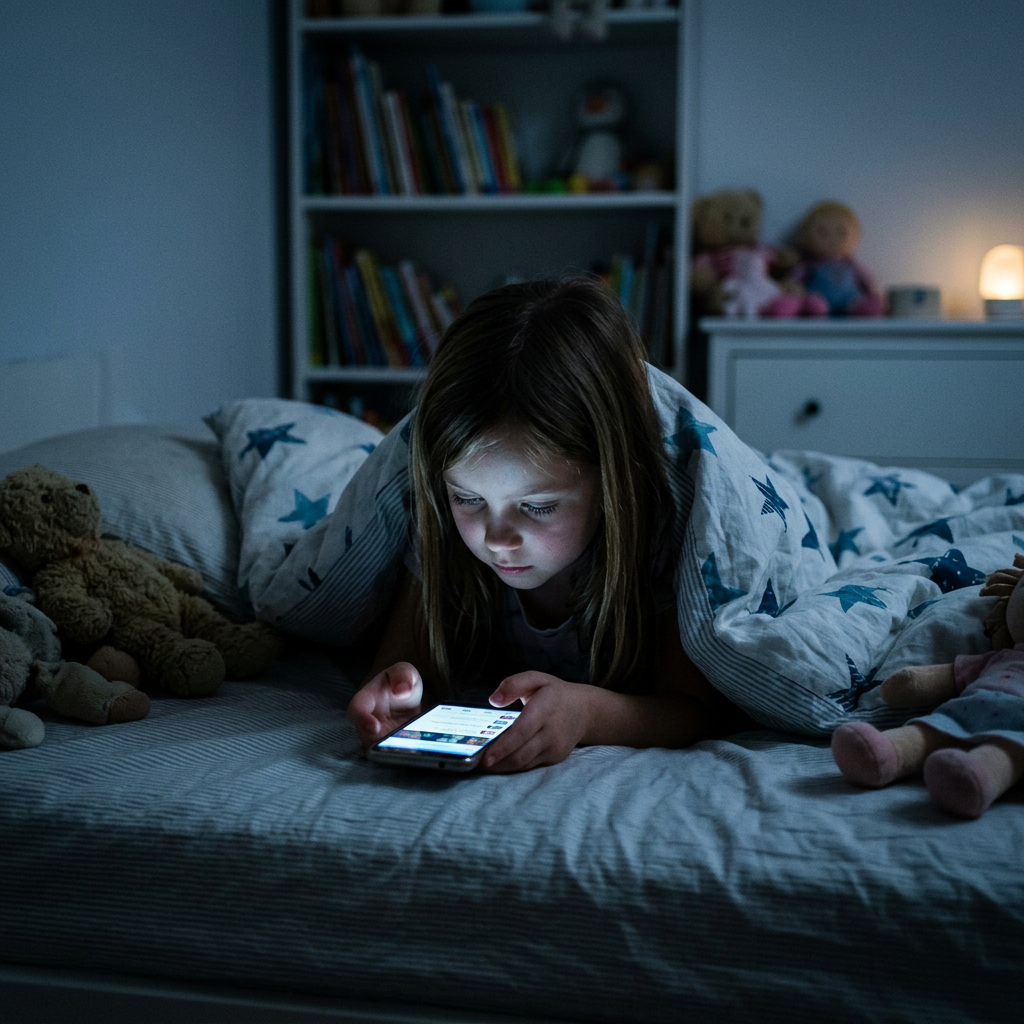
TikTok is the most watched platform among children in the UK. Most parents have significant reservations about it. Both of those things are true at the same time.
TikTok has over a billion active users globally, a minimum age of 13, and – according to Ofcom’s most recent research – is the platform most likely to expose children to harmful content through its recommendation algorithm. It is also, for many children aged 10 and upwards, the platform they most want to be on.
This guide doesn’t take a position on whether your child should use TikTok. That depends on their age, maturity, and your family’s values, and no article can make that call for you. What it can do is give you an accurate picture of what TikTok actually is, what the risks genuinely look like, and what controls exist – so whatever decision you make is an informed one.
What TikTok is and how it works
TikTok is a short-form video platform – the default feed serves videos of between 15 seconds and ten minutes, chosen entirely by an algorithm. Unlike YouTube, where a child at least starts with a search or a subscribed channel, TikTok’s default experience is a continuously scrolling feed of content chosen for them before they’ve expressed any preference at all.
That distinction matters. YouTube’s algorithm responds to what a child watches and searches for. TikTok’s algorithm starts serving content from the moment an account is created, based on what similar users have engaged with. The platform is designed to learn what a user responds to and serve more of it – as quickly as possible, and with no natural stopping point.
The result is a feed that is, by design, more personalised and more immediately engaging than almost any other platform. It is also the mechanism through which most of the risks associated with TikTok operate.
The risks – clearly stated
Harmful content via the algorithm. In May 2026, Ofcom published findings that TikTok had failed to commit to meaningful changes to reduce harmful content being served to children through its recommendation feed. The regulator noted that despite existing safeguards, the platform continued to expose under-18s to potentially harmful material. Research cited by Ofcom found that the debate around online child safety has shifted from removing harmful content after it appears to questioning why the algorithm recommended it in the first place – a framing that applies more acutely to TikTok than to almost any other platform.
Age verification failures. TikTok’s minimum age is 13. There is no meaningful age verification. 84% of children aged 8-12 are still using at least one major platform with a minimum age of 13, and TikTok is typically among them. Younger children on TikTok have no age-appropriate filtering applied to their feed. This is precisely the gap that the UK government’s announced ban on social media for under-16s is designed to address – though enforcement remains an open question.
Privacy and data. TikTok was fined £12.7 million in the UK for improperly handling children’s data. Privacy researchers continue to raise concerns about the data TikTok collects from all users – including children – and what is shared with ByteDance, its Chinese parent company. For a child who is sharing content, watching videos, and engaging with a feed for hours a day, the data footprint is significant.
The format itself. Short-form video content – rapid cuts, constant novelty, infinite scroll – is the format that research most consistently associates with reduced attention spans and difficulty tolerating slower stimuli in children. This isn’t specific to TikTok, but TikTok has optimised the format more aggressively than any competitor. The science on passive, algorithmically-served content is clearer here than on almost any other platform.
What the parental controls actually offer
TikTok’s Family Pairing feature connects a parent’s account to their child’s, enabling:
- Screen time limits (daily maximum viewing time)
- Restricted Mode (attempts to filter mature content)
- Direct message controls (can be turned off entirely for under-16s)
- Search restrictions (can disable search)
- Privacy settings for who can see and share content
These controls are real improvements on an unmanaged account. They are also subject to the same limitations as all platform-level parental controls: Restricted Mode is inconsistent, the algorithm still runs within whatever content pool remains, and the controls require periodic checking as they can reset or be adjusted.
Family Pairing requires the parent to have their own TikTok account, which is worth knowing before setting it up.
How TikTok compares to YouTube for children
The two platforms are frequently discussed together – Ofcom’s report covered both, and both were criticised for algorithm-driven exposure to harmful content. But they’re meaningfully different in ways that affect the risk profile for children.
YouTube is primarily a search-and-subscribe platform. Children typically arrive at YouTube with an intention – to watch a specific creator, search for a tutorial, or follow up on an interest. The algorithm operates on top of that intention. Algorithmic creep is a real risk, but it starts from a place of some intentionality.
TikTok’s entire design is the algorithm. There is no subscription feed to return to, no search-first experience, no starting point other than what the platform has decided to show. For younger children in particular, this makes meaningful parental oversight considerably harder – you cannot curate a TikTok feed the way you can curate a YouTube experience.
What age is appropriate?
There is no consensus answer, but the weight of expert opinion points in a consistent direction.
For children under 13, the official minimum age, the answer from child safety organisations is clear: TikTok is not appropriate. The combination of no age verification, the algorithm-first design, and the documented exposure to harmful content makes it an unsuitable environment for primary school-age children.
For 13-16 year olds, the picture is more nuanced – though it may become clearer soon. TikTok does offer more protections for accounts registered as under-16 – direct messages off by default, some content restrictions. Whether those protections are sufficient depends on the maturity of the individual child and the degree of parental involvement. Many child safety experts recommend waiting until 16 at the earliest, and the UK government has now announced legislation that would make 16 the legal minimum – expected to come into force in Spring 2027.
For children aged 16 and above, the conversation shifts from restriction to guidance – regular discussions about what they’re watching, what the algorithm is doing, and how to think critically about the content they’re consuming.
One part of a bigger picture
TikTok sits outside what Streamu currently addresses – we’re focused on YouTube, which is where most younger children spend the majority of their screen time. But the questions TikTok raises for parents are the same ones that run through everything we write about: what is the algorithm serving your child, why is it serving it, and are you making an active choice about what they’re exposed to – or leaving that choice to a platform whose interests don’t align with yours?
Those questions don’t have easy answers on TikTok. They have more manageable ones on YouTube – and the tools to address them are more developed than most parents realise.
Join a growing community of conscious parents taking back control.

Leave a Reply